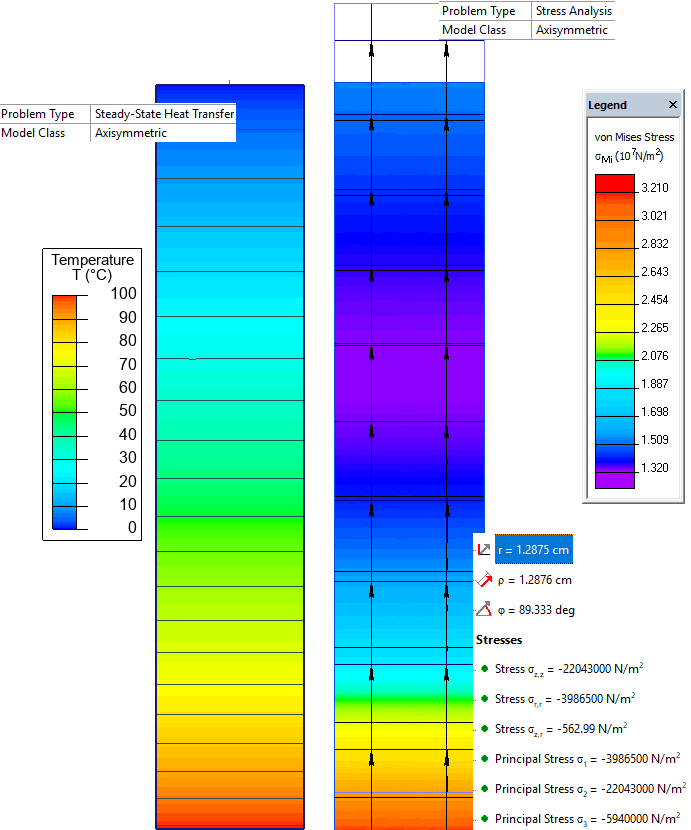
Heat Transfer
Solves for the temperature distribution in steady-state and transient heat transfer; heat sources can be given directly or imported as Joule losses from another problem.
About This Module
The Heat Transfer module analyzes the temperature distribution in steady-state and transient heat transfer. Heat sources in the Heat Transfer module can either be given directly or imported as Joule losses from another QuickField problem (a coupled problem).
The Heat Transfer module can be used to design and analyze many different electrical and mechanical systems.
Supported formulations:Steady-state heat transfer analysis supports not only 2D plane-parallel and 2D axisymmetric formulations, but also 3D Extrusion and 3D Import.
Heat Transfer Features
Steady-state or transient formulation, with an arbitrary initial field distribution, nonlinear specific heat, and flexible time parameters
Nonlinear or anisotropic material properties
Distributed and lumped heat sources
Heat sources can be defined as a function of temperature
Heat sources produced by electrical power loss
Boundary temperature and heat flux density
Boundary conditions with convection/radiation terms
Results: multiple temperature field display modes (temperature, heat flux density, temperature gradient), total heat loss over any part, and other integral quantities
Coupling: the resulting temperature can be used in thermal stress analysis, in both steady-state and transient cases; a transient heat transfer problem can be based on the results of another steady-state or transient problem
Examples Using This Analysis Type9
All examples →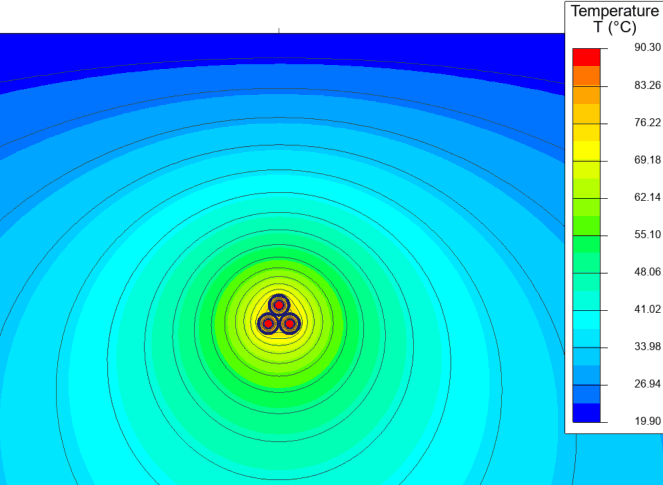
3-phase cable thermal analysis, CIGRE TB 880 Case #0-1
Plane-parallel steady-state heat transfer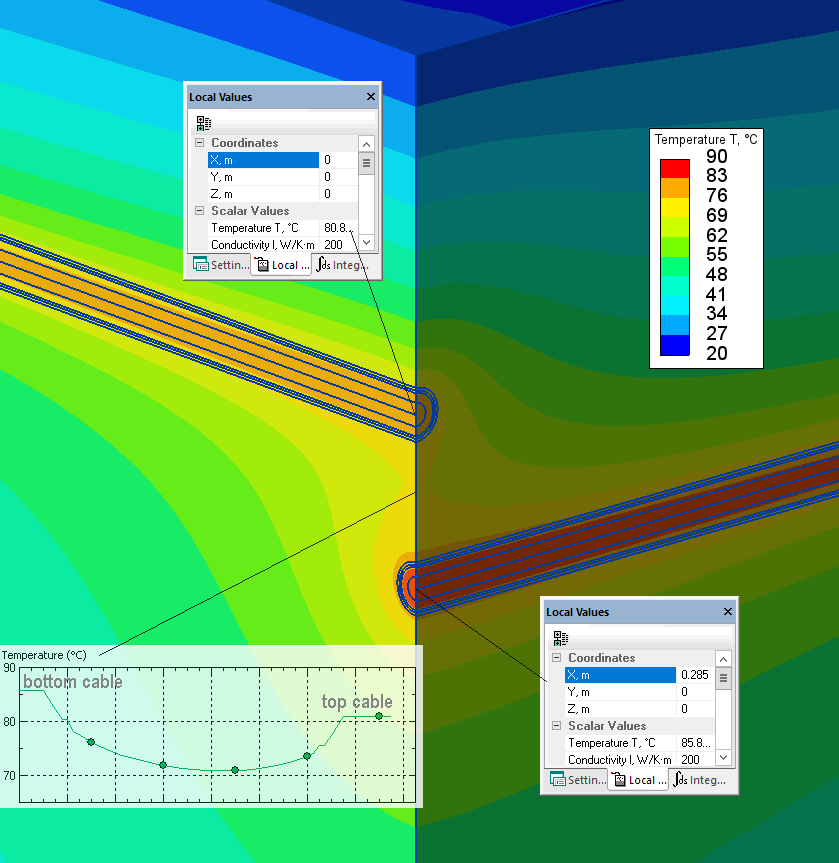
Underground cables crossing
3D heat transfer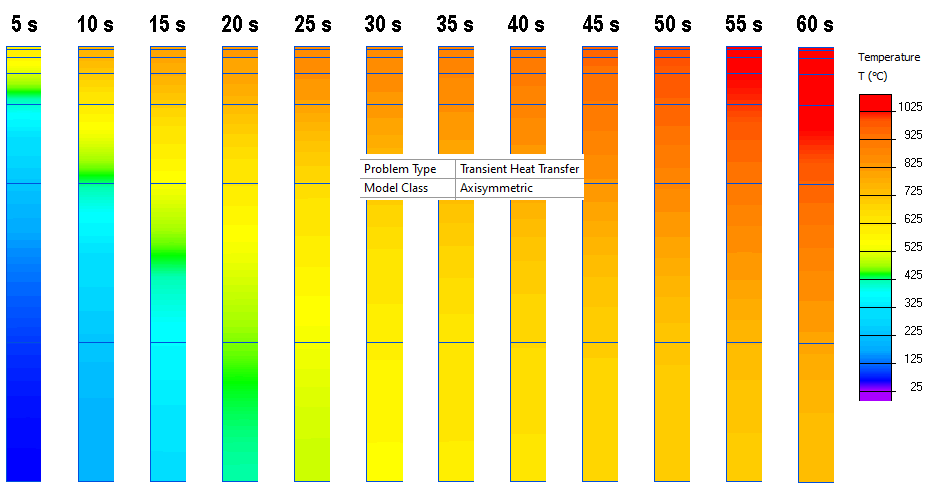
Induction heating with temperature dependent properties
Axisymmetric multiphysics: AC Magnetics coupled with transient heat transfer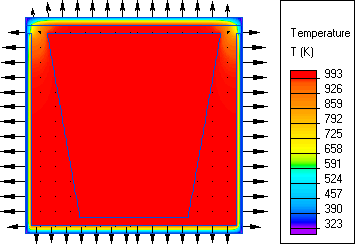
Temperature field inside the crucible stove
Plane-parallel steady-state heat transfer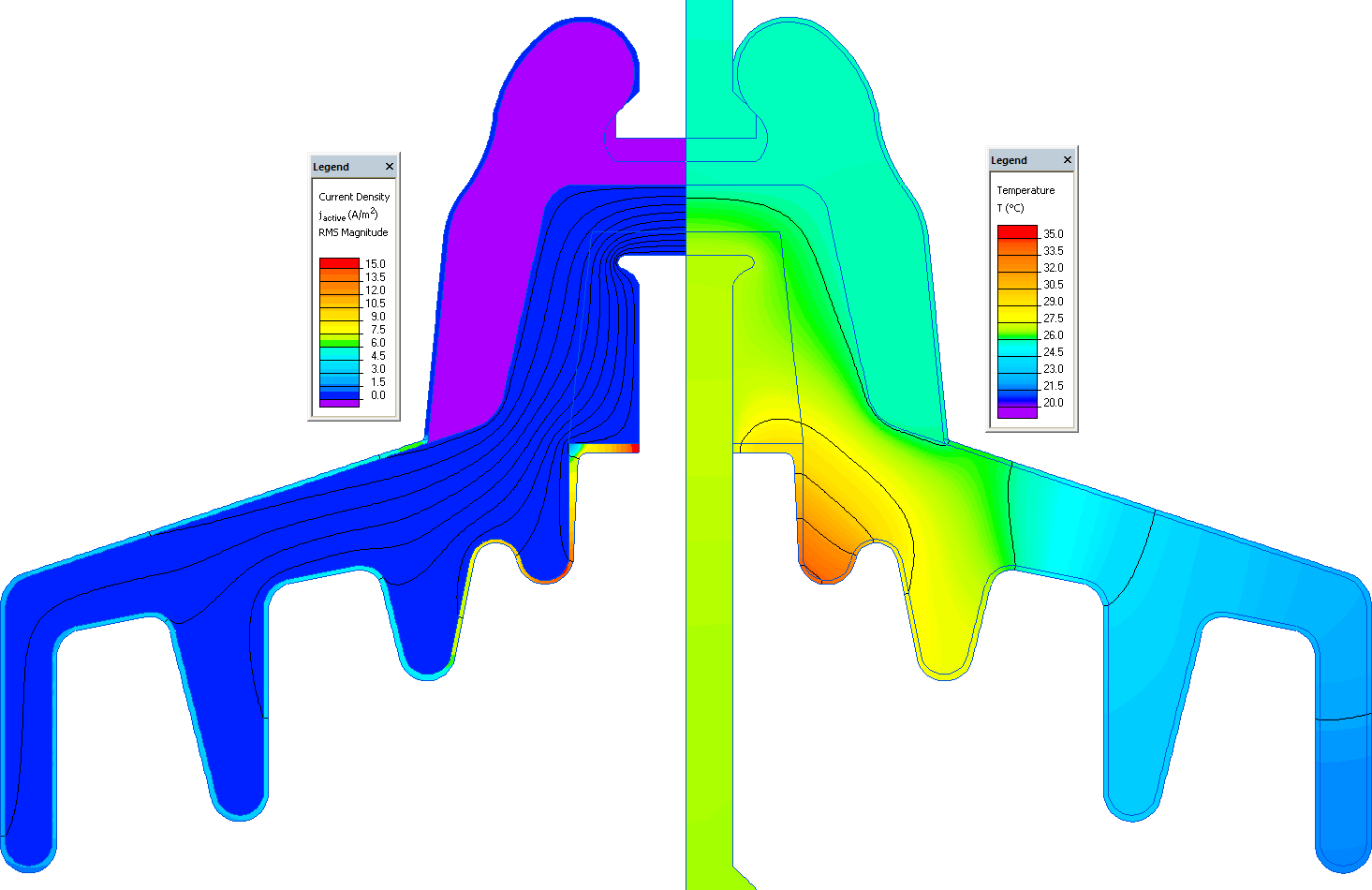
Disc insulator leakage current
Axisymmetric multiphysics: AC Conduction coupled with steady-state heat transfer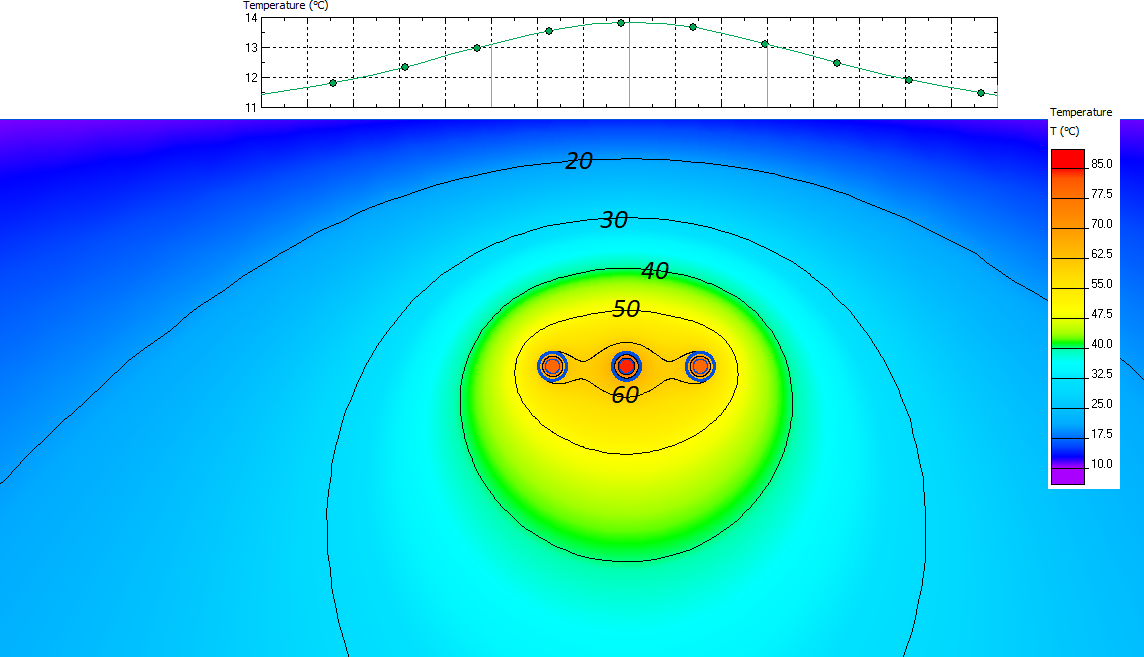
Underground cable temperature
Plane-parallel steady-state heat transfer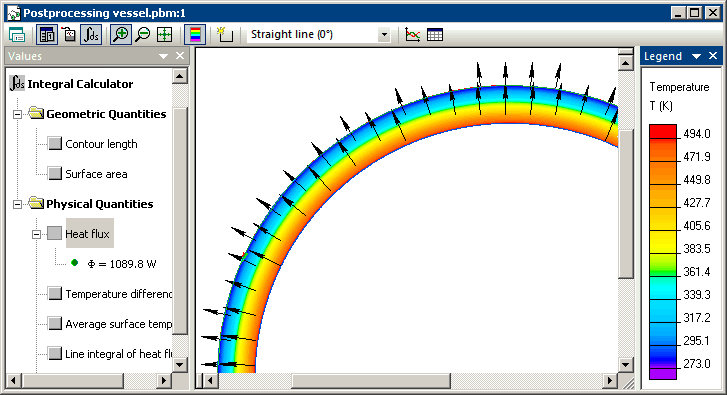
Vessel
Axisymmetric steady-state heat transfer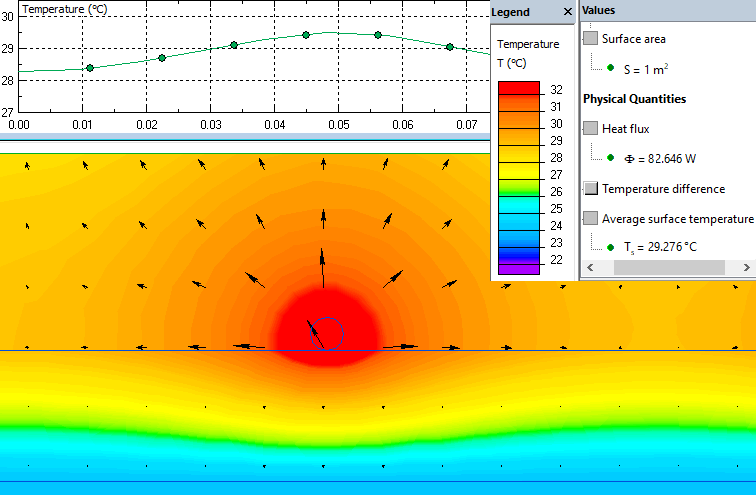
Underfloor heating
Plane-parallel steady-state heat transfer