AC Conduction
Computes the electric field and current distribution in conductors and dielectrics under time-harmonic AC voltage or current, accounting for both resistive and capacitive effects.
About This Module
The AC Conduction module analyzes the electric field produced by time-harmonic voltage and current given on region boundaries. The medium is assumed to be non-ideal, with a small but non-zero conductivity. AC Conduction analysis is typically concerned with quantities such as potential, active and reactive current, field strength, Joule loss, capacitance and electric force. AC Conduction complements the other electric field analysis types in QuickField — Electrostatics and DC Conduction — accounting for both resistive and capacitive effects at the same time.
The AC Conduction module can be used to design and analyze capacitors, insulation systems, cables and other conductive systems, as well as other technical applications.
AC Conduction Features
Anisotropic conductivity
Anisotropic permittivity
Voltage sources and current density sources
Dirichlet or Neumann boundary conditions
Results: potential, field strength, conduction current density and reactive (displacement) current density, electric flux density, Joule loss, self and mutual capacitance, force, torque, field energy
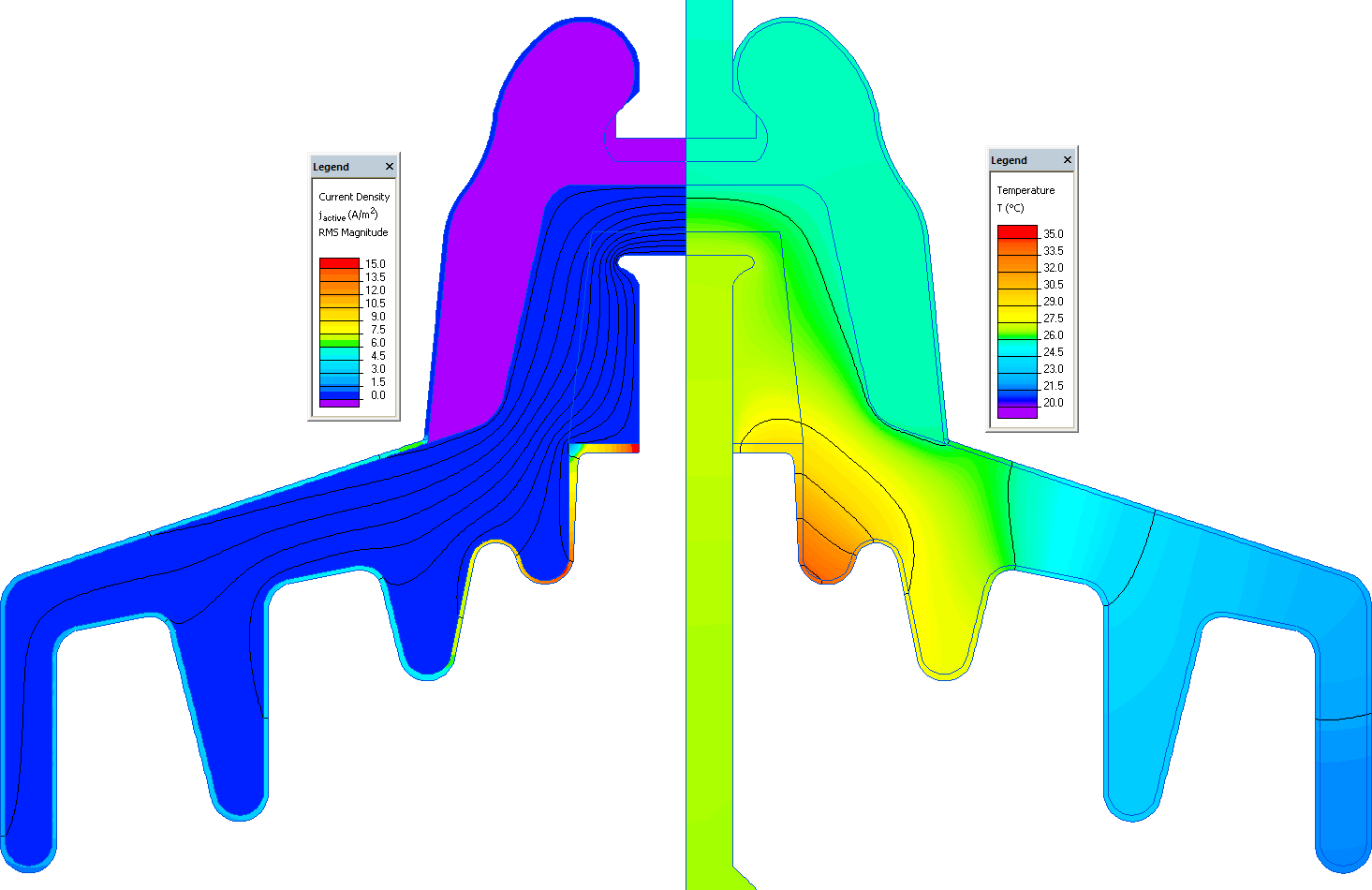
Coupling: power loss can be used as a heat source (Joule heating) in thermal analysis (electric-thermal coupling); electric force can be used in stress analysis (electric-structural coupling)
Examples Using This Analysis Type3
All examples →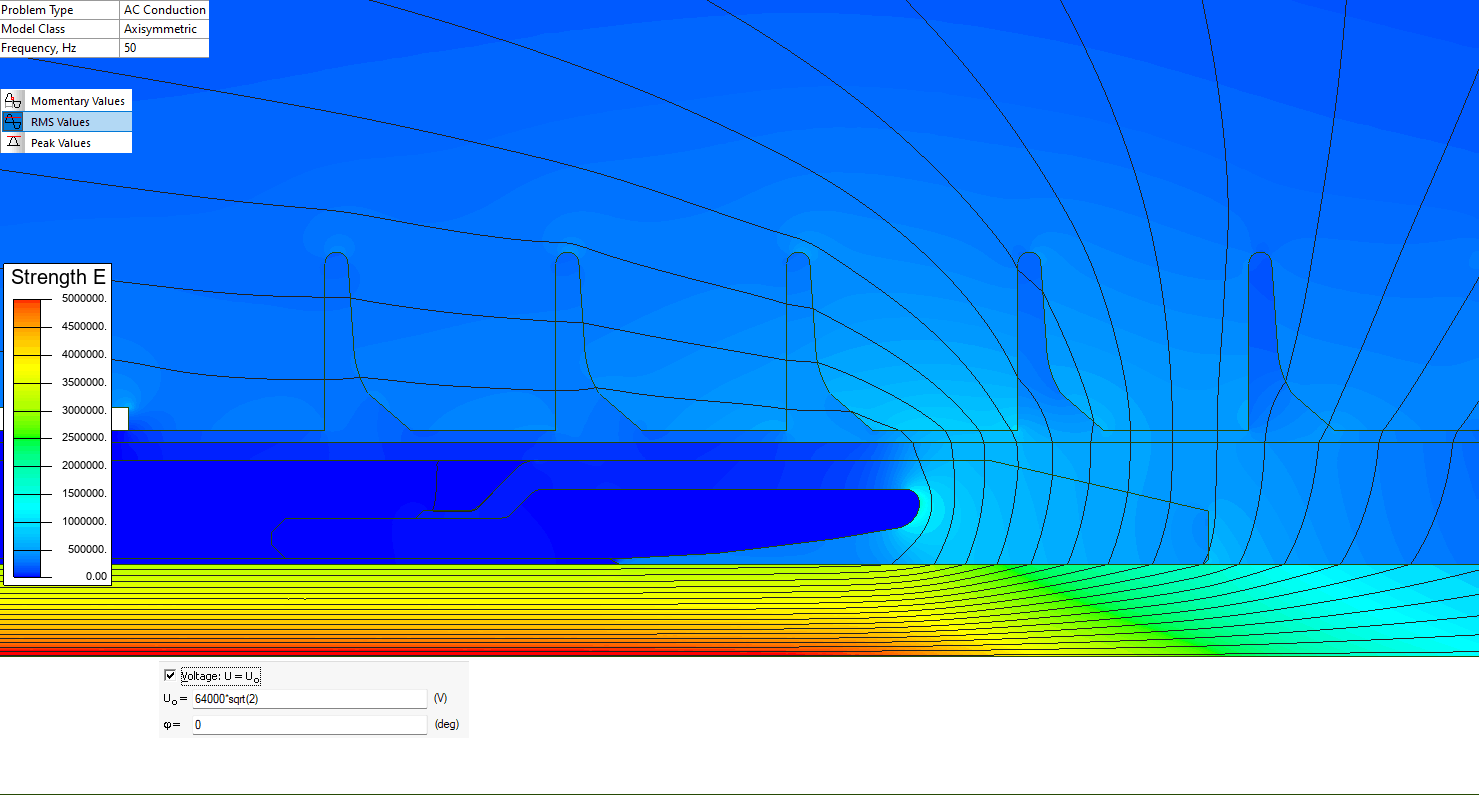
Cable termination to oil filled bushing
Axisymmetric AC Conduction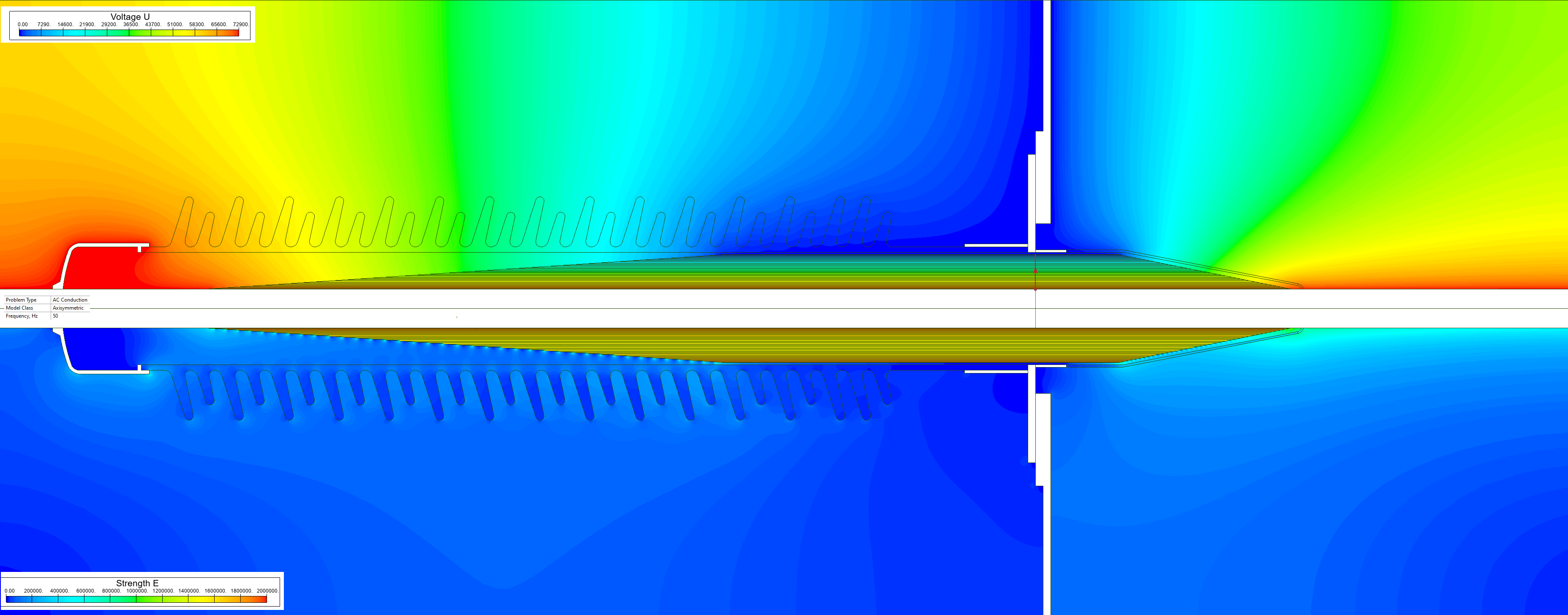
Condenser bushing field grading
Axisymmetric AC Conduction