
Electromagnetic, Thermal and Stress Analysis
QuickField is a Finite Element Analysis package for electromagnetic, thermal and stress design simulation, covering magnetostatics, transient magnetics, AC magnetics, electrostatics, DC conduction, steady-state and transient heat transfer, and stress analysis.
View analysis types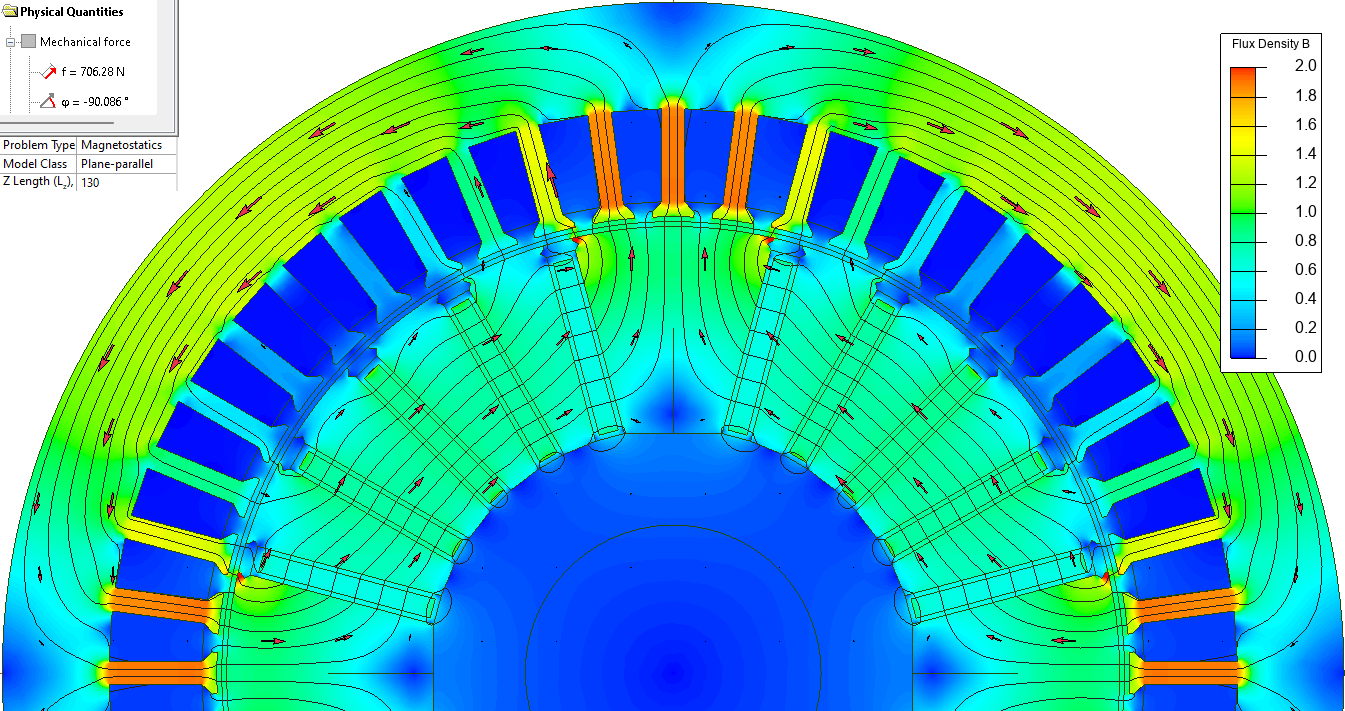
About QuickField
QuickField is an efficient Finite Element Analysis (FEA) package for electromagnetic, thermal and stress design simulation, with support for coupled multiphysics analysis. It combines a family of analysis modules built on the latest solver technology with a very user-friendly model editor (preprocessor) and a powerful postprocessor.
QuickField is a native application designed specifically for the Windows® platform, taking full advantage of a modern operating environment. It is compact yet powerful — 1 GB of RAM and 300 MB of disk space is enough to run it, and 4 GB of RAM lets it solve 2D problems of any size — making it well suited to design work that requires magnetic, electric or thermal-structural analysis.
Multiphysics Coupling
Loads pass directly between electromagnetic, thermal and stress fields
Full Range of Analysis Types
Magnetostatics, transient magnetics, AC magnetics, electrostatics, DC conduction, heat transfer, stress
Circuit Coupling
Field models can connect to resistors, capacitors, inductors and voltage/current sources
Parametric Sweeps
LabelMover automatically varies the geometry, solves in batches and extracts results
Lightweight & Native
Built for Windows®; 4 GB of RAM solves 2D problems of any size
Analysis Types
QuickField offers composable configurations built around your analysis needs. Every configuration includes a model editor, data editor, solver and postprocessor. The analysis modules fall into three groups — magnetic, electric, and thermal/structural — and can be combined for multiphysics coupling.
For low- and medium-frequency electromagnetic simulation that considers only the magnetic field component. Magnetostatics supports nonlinear materials, permanent magnets, DC currents and various boundary conditions; transient magnetics models time-varying field sources and pulses; AC magnetics handles time-harmonic AC systems. Both transient and AC magnetics can be coupled with the built-in circuit simulator to connect the field model to resistors, capacitors, inductors and voltage/current sources.
For electromagnetic problems where magnetic effects can be neglected. Electrostatic analysis computes the field produced by static charges and applied voltages in conductors and dielectrics; DC conduction computes current distribution in conductive materials; AC conduction handles time-harmonic voltages and currents; transient electric allows arbitrary time-varying voltage and current waveforms.
Steady-state heat transfer solves for the stable temperature distribution under any combination of heat sources and cooling conditions; transient heat transfer studies how temperature evolves over time under time-varying heat sources and cooling. Both can be coupled with electromagnetic analysis, importing Joule and iron losses directly as heat sources.
Computes mechanical stress, strain and deformation of a structure under thermal and mechanical loads. Combined with multiphysics coupling, results from a thermal or electromagnetic-force analysis can be imported as loads, completing the chain from electromagnetics to temperature rise to structural deformation.
Application Areas
QuickField is widely used for electromagnetic, thermal and stress analysis of electrical and electromechanical equipment such as motors, transformers, induction heating systems, cables and transmission lines. Its main application areas include:
Simulation Examples
QuickField is used effectively across a wide range of engineering tasks — most commonly in the design of electric motors, turbine generators, actuators, loudspeakers, transformers, induction heating systems, transmission lines and other complex electrical and electromechanical devices. Its application is not limited to this list.
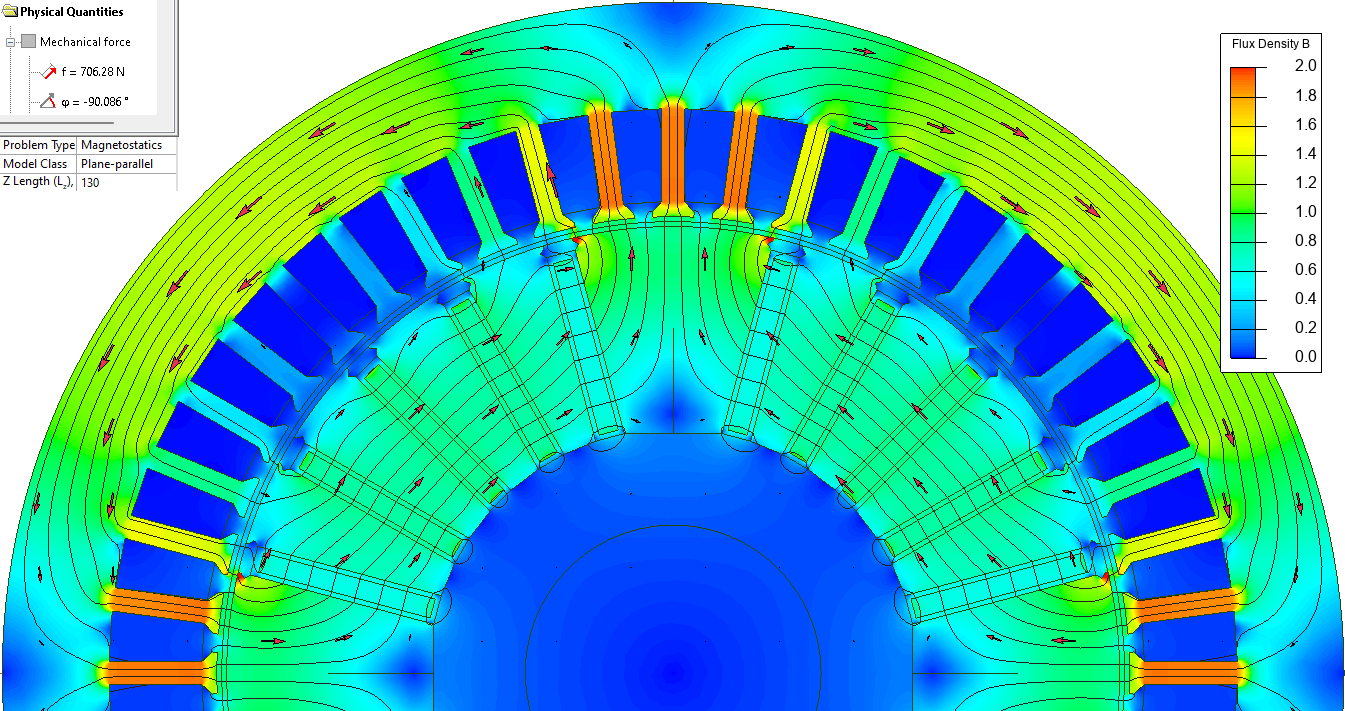
Unbalanced magnetic pull
Unbalanced magnetic pull produced by an eccentricity between the rotor and stator magnetic centers of a permanent magnet synchronous generator.
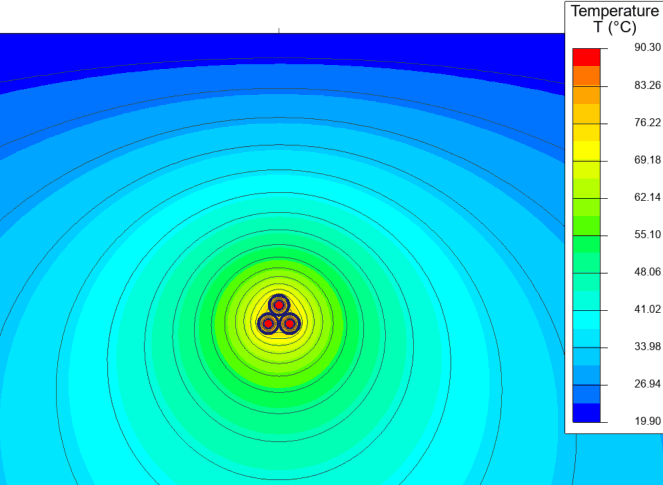
3-phase cable thermal analysis, CIGRE TB 880 Case #0-1
Temperature field of a three-phase cable computed for the rated current and laying conditions given in CIGRE TB 880 Case #0-1.
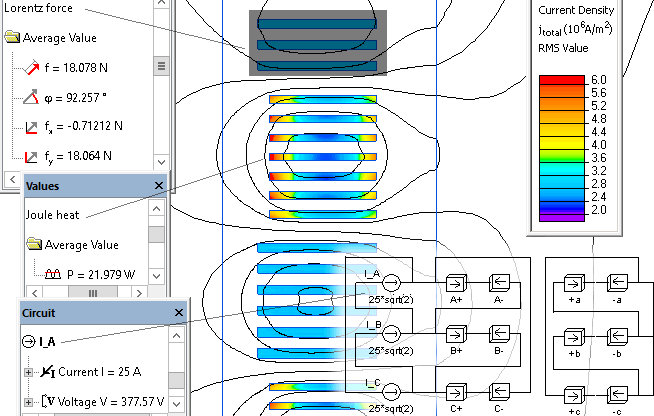
Electric arc furnace transformer short circuit
Short-circuit voltage, winding forces and stray leakage flux of an electric arc furnace transformer under short-circuit test conditions.
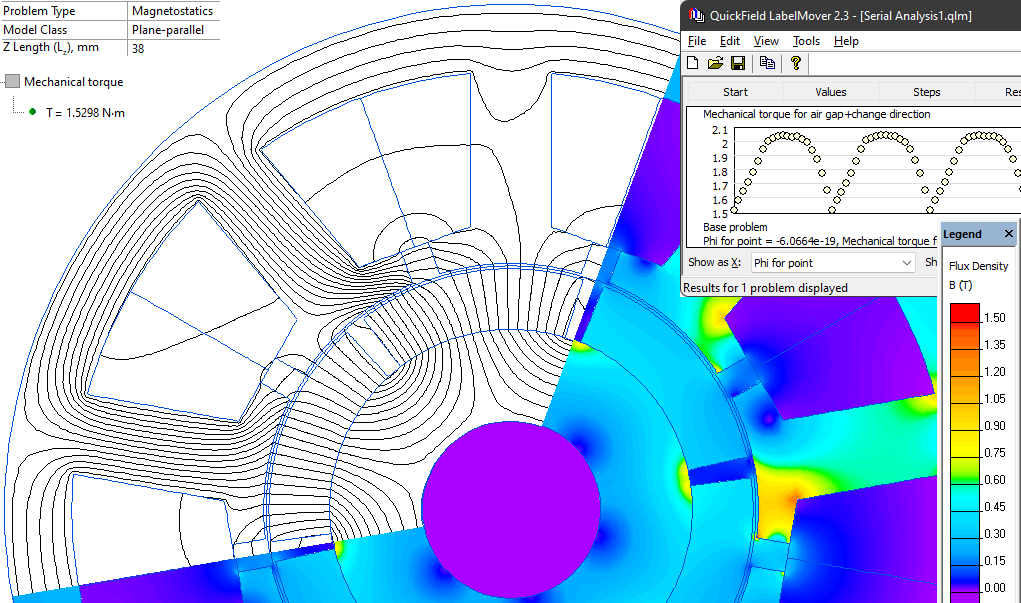
BLDC motor torque ripple
Average torque and torque ripple of a BLDC motor during electronic commutation, reflecting torque fluctuation as different stator phases are energized.
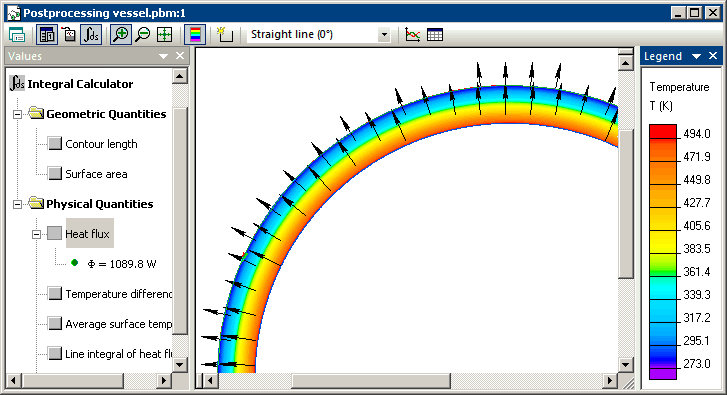
Vessel
Heat flux through the spherical wall of an insulated vessel, which separates a heated interior medium from a cooler environment, with fixed temperatures on both sides.
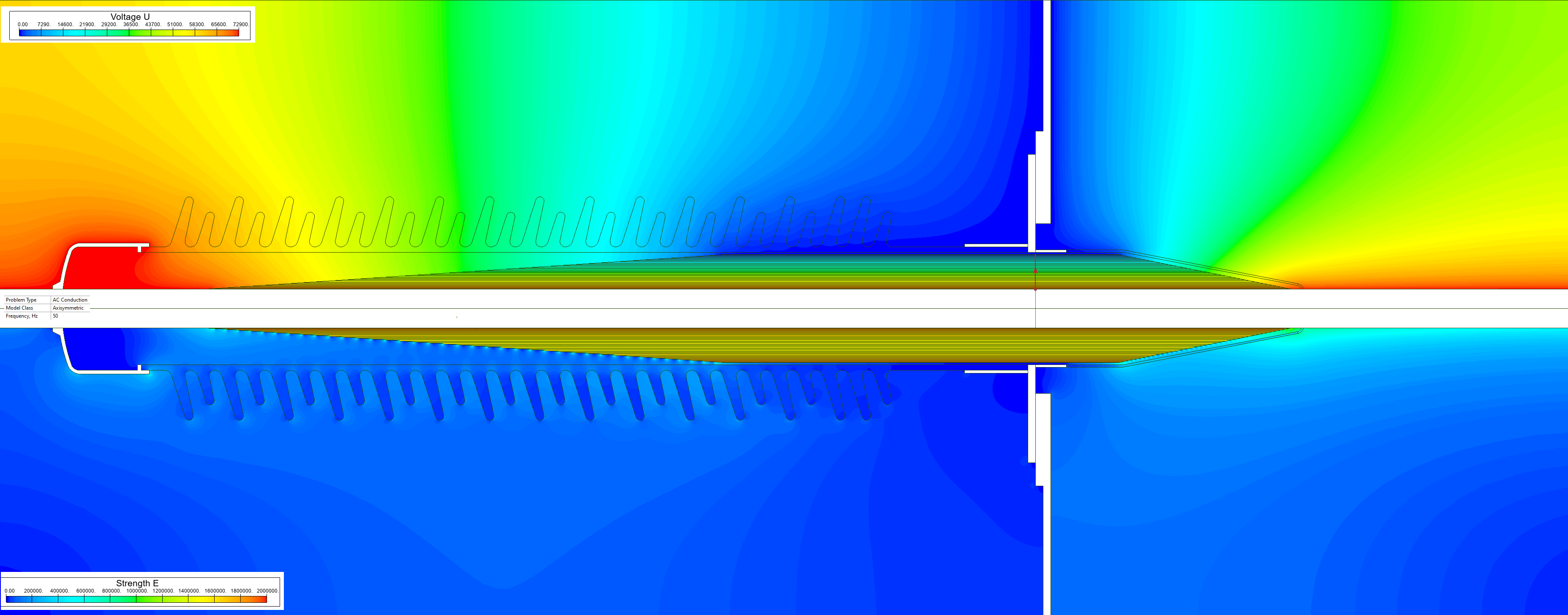
Condenser bushing field grading
Electric field strength distribution and C1, C2 capacitances of a condenser-type transformer bushing with internal grading foils and oil-impregnated paper insulation.
Customers
A number of Chinese industrial companies, research institutes and universities use QuickField for electromagnetic, thermal and stress simulation.
Buy QuickField
QuickField is available under single-seat and floating network licenses. Contact us for licensing options and pricing.